
AI for Alberta SMBs: Why Your ROI is Stalling
- Jeff Uhlich

- Mar 8
- 6 min read

If you walk into a coffee shop in downtown Calgary or an office in Edmonton today, someone is talking about artificial intelligence. They might be using ChatGPT to draft a newsletter or asking Microsoft Copilot to summarize a long meeting transcript. According to Statistics Canada, the number of Canadian businesses using AI to deliver services doubled to over 12 percent by early 2025. On the surface, this looks like a triumph of modernization.
It's actually a warning sign.
While adoption is skyrocketing, the return on investment remains stubbornly low for most small and medium-sized businesses (SMBs). We are witnessing what we call shallow adoption: organizations are adding AI tools to their existing tech stack without changing how they actually work. They are buying the car but forgetting to look at the engine under the hood or refine the fuel.
At augmentus inc., we see this gap every day. Business owners are curious, yet they are frustrated that the promised hours of saved time have not materialized. This post examines why this gap exists in our Western Canadian context and how you can bridge it through disciplined, boring, and highly effective workflow design.
The Reality of Shallow Adoption
The statistics from recent scans are clear: 93 percent of Canadian business leaders say their teams use AI in some form, but only 31 percent have integrated it into core operations. This means most usage is happening at the edges. An employee might use an LLM to fix the tone of an email, or a marketing coordinator might generate a social media caption.
These are small wins, certainly, but they don't move the needle on firm-wide productivity. Shallow adoption occurs when a tool is used as a fancy typewriter rather than a logic engine. If your underlying business process is broken, using AI will only help you produce bad results faster.
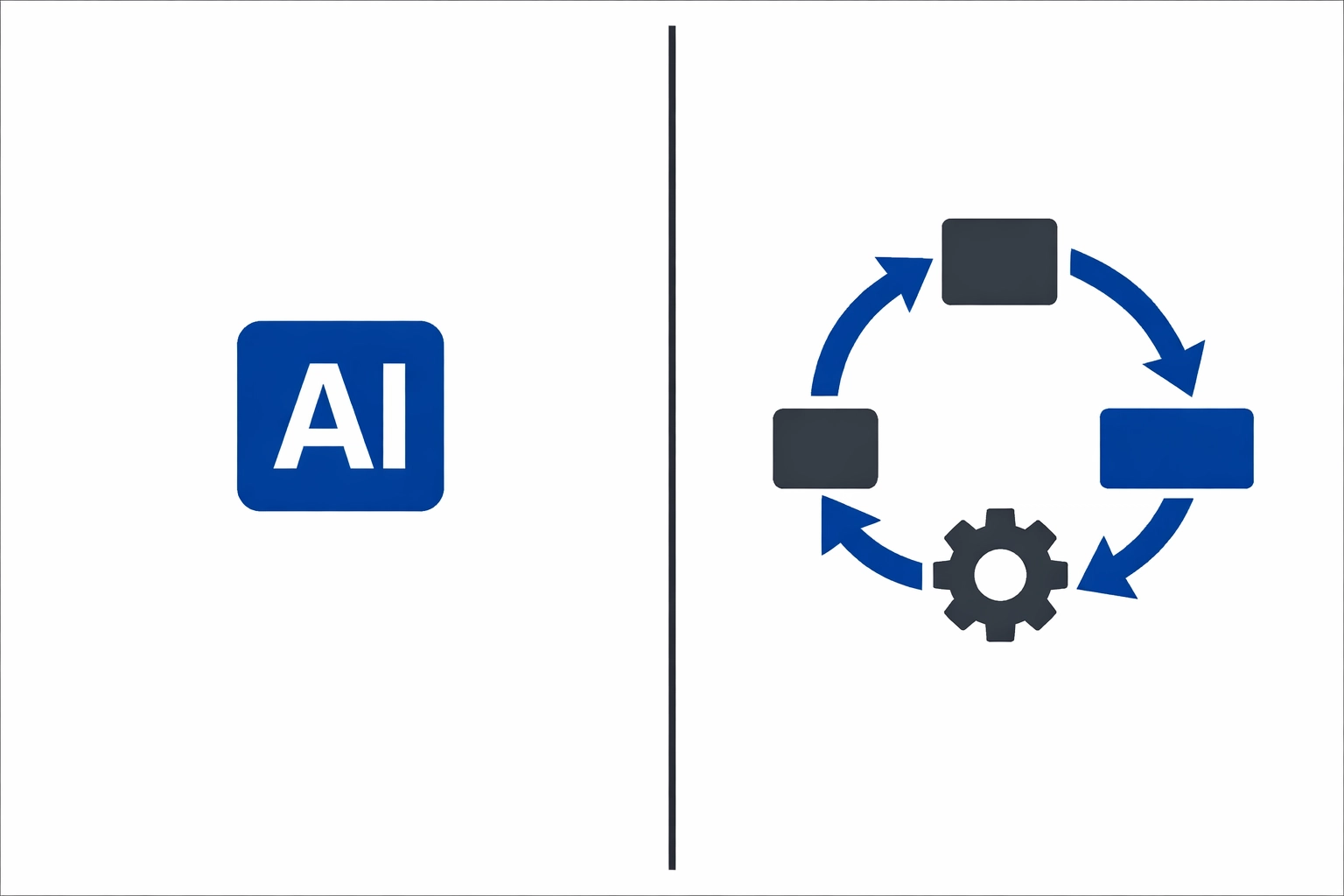
To move beyond the shallow end, you must stop looking at AI as a product you buy. You must start seeing it as a capability you develop. This requires a shift from experimentation to operationalization. You can read more about how we approach this on our process page.
The Alberta Nonprofit Governance Crisis
While SMBs struggle with ROI, our nonprofit sector faces a more immediate risk: the governance gap. Recent data from Imagine Canada shows that while a majority of Canadian nonprofits are now using AI tools, a staggering 64 percent of them have no formal AI policy.
This is a significant liability for Alberta-based community organizations and municipalities. Using a public AI model to summarize board minutes or analyse donor data without a privacy framework is a risk to your reputation and your compliance. In Western Canada, where trust is the primary currency of the nonprofit sector, this oversight is dangerous.
The Office of the Privacy Commissioner has already issued generative AI principles that emphasize transparency and accountability. If your organization is using these tools without a "Responsible Use" policy, you are flying blind. We have previously discussed the AI gap and Alberta's small businesses and how it affects the local ecosystem.

A basic policy does not need to be fifty pages long. It should clearly state which data can be shared with AI models, who is responsible for verifying the output, and which tools are approved for use.
Here's a tip: load key non-confidential source documents (such as Mission, Vision, Values, Purpose Statement, Strategic Plan, Goals, Objectives, and KPIs) into your LLM of choice. Ask: 'From the perspective of a Western Canadian nonprofit organizational development, governance, and leadership expert, can you use the context provided by the attached documents to create a comprehensive draft AI Responsible Use Policy for [your organization name]? Use Search to surface current AI Governance best practices in the Canadian nonprofit sector.'
The result will probably get you 70% to 80% of what you need. Iterate with the LLM, question and challenge it. When you get to a result that is 90% there, circulate it to your team for the necessary Human In The Loop input. With the tools available to nonprofit organizations today, there's no excuse for more than 60% not having an AI Responsible Use Policy. It's not that hard.
For those looking for a starting point, our guide on building a simple AI governance framework is a practical resource for non-technical leaders.
The Hype Trap: Why You Don't Need Agents Yet
The current buzz in the tech world is focused on agentic AI. These are systems designed to act as autonomous workers that can execute sequences of tasks with minimal human oversight. I've been experimenting with these new extensions of AI's capabilities. And while the technology is impressive, for the vast majority of Alberta SMBs, it's currently a distraction.
Most organizations have not yet mastered the basics of prompting, context engineering, or data hygiene. If you cannot get an AI to consistently draft a correct project update, why would you trust an autonomous agent to manage your client communications?
We advocate for a skeptical approach to the latest hype. Before you chase agents, you must fix your boring workflows. This means documenting your steps, identifying where the bottlenecks are, and determining if a simple, human-in-the-loop AI intervention can solve the problem.
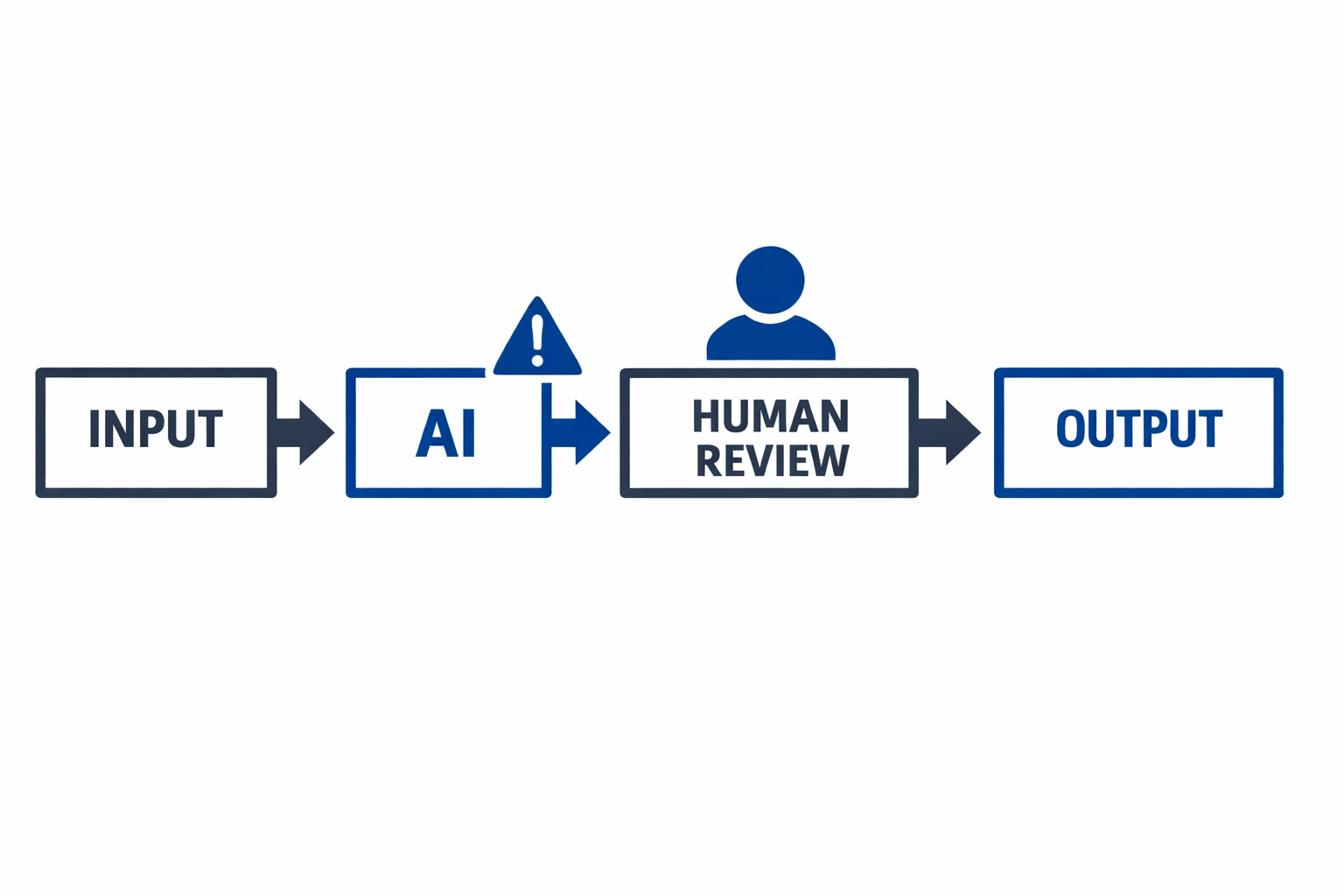
In our AI business solutions, we emphasize that accountability always remains with the human. If an AI makes an error in a construction bid or a legal summary and you do not catch it, the fault lies with you, not the machine.
The One Workflow, One Win Strategy
How do you break the cycle of weak ROI? We recommend the "One Workflow, One Win" sprint. Instead of trying to "implement AI" across your entire company, pick one specific, repeatable task that takes too much time.
Perhaps it is your weekly reporting, your initial lead triage, or your internal knowledge search. Focus your efforts there for 30 days. Define the input, design the AI prompt or tool integration, and establish a rigorous human review process.
The goal is to prove value in a controlled environment. Once you have a measurable win, you can get the internal buy-in and the technical confidence to move to the next workflow. This is a far more effective strategy than a broad, expensive "AI transformation" that likely ends in frustration.
Consider a professional services firm in Edmonton. They spend ten hours a week summarizing case notes. By designing a privacy protected and specific workflow for this one task, they reduce that time to two hours of review. That is an eight-hour win every week. That is real ROI. It is not flashy, but it is profitable.
Regional Support and the Path Forward
Alberta businesses are in a unique position to lead this transition. Organizations like Alberta Innovates and PrairiesCan are increasingly focused on helping local firms move from research to practical commercialization. In our $ for SMBs link in the nav bar you can find information about funding options for your business. And there's a handy questionnaire that will deliver best options straight to your inbox.
Furthermore, BDC has signaled a commitment of 500 million dollars over the next four years to help SMEs adopt digital technologies, with a heavy emphasis on AI. This funding exists to help you bridge the gap between "trying AI" and "winning with AI."
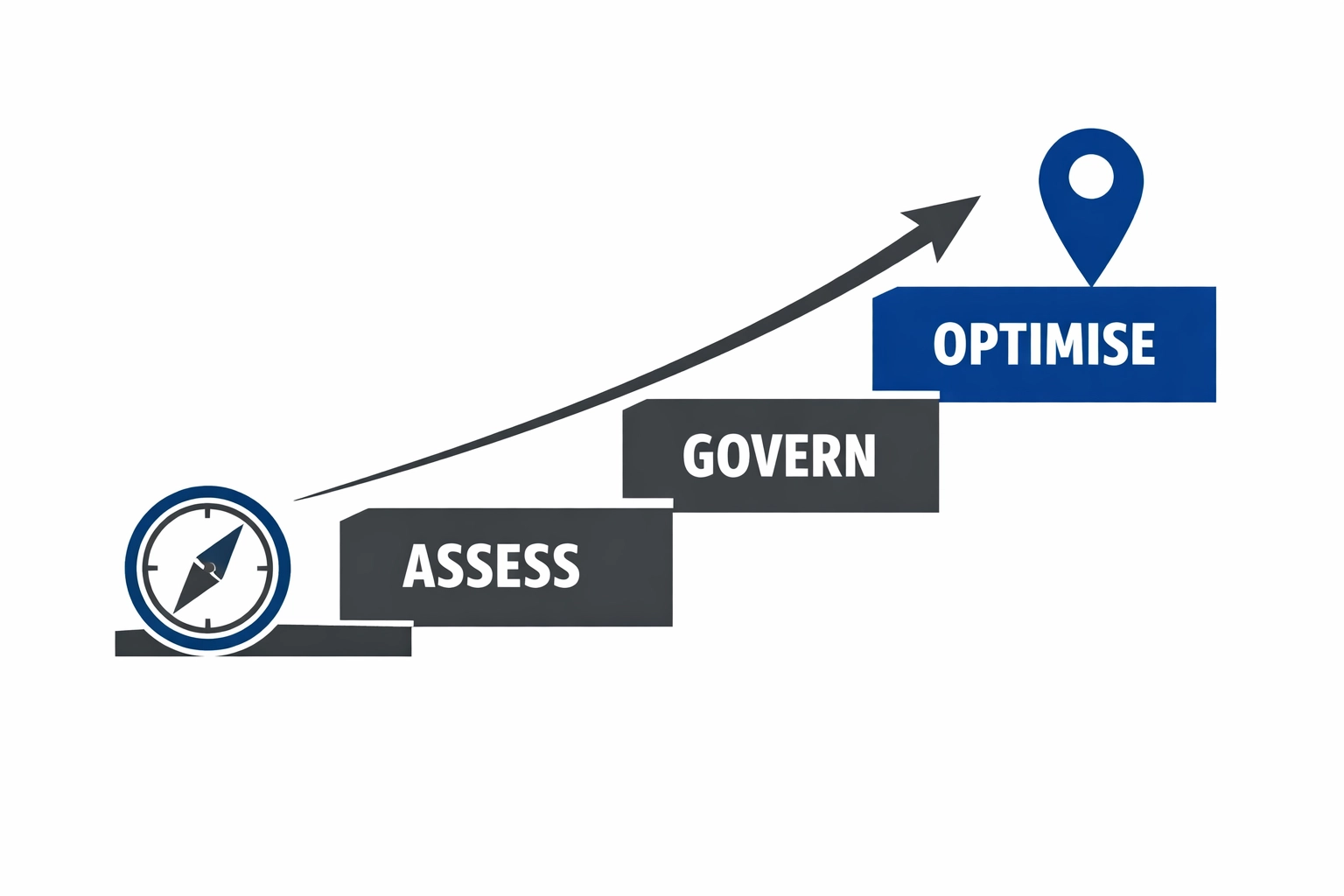
We are not here to sell you on a futuristic vision where machines do all your work. We are here to help you use the tools you already pay for, such as Microsoft 365, Google, or other LLMs, to work more effectively today. If you're curious about your organization's position, we offer an AI readiness and opportunity assessment to help you find your first win.
A Challenge for the Alberta Leader
As we move further into 2026, the question is no longer whether your competitors are using AI. They are. The question is whether they are using it better than you.
Are you satisfied with saving five minutes on an email, or are you ready to redesign the processes that actually drive your revenue?
Are you willing to tolerate the risk of ungoverned usage, or will you build the trust-based framework your donors and customers expect?
The productivity gap is real, but it is also an opportunity. While others are chasing the hype of autonomous agents, you can build a disciplined, human-led operation that uses AI as it was intended: as a powerful, specialized tool for the specialized professional.
If you are ready to stop experimenting and start winning, we invite you to book a free initial consultation. Let's find that first measurable win together.
Comments